
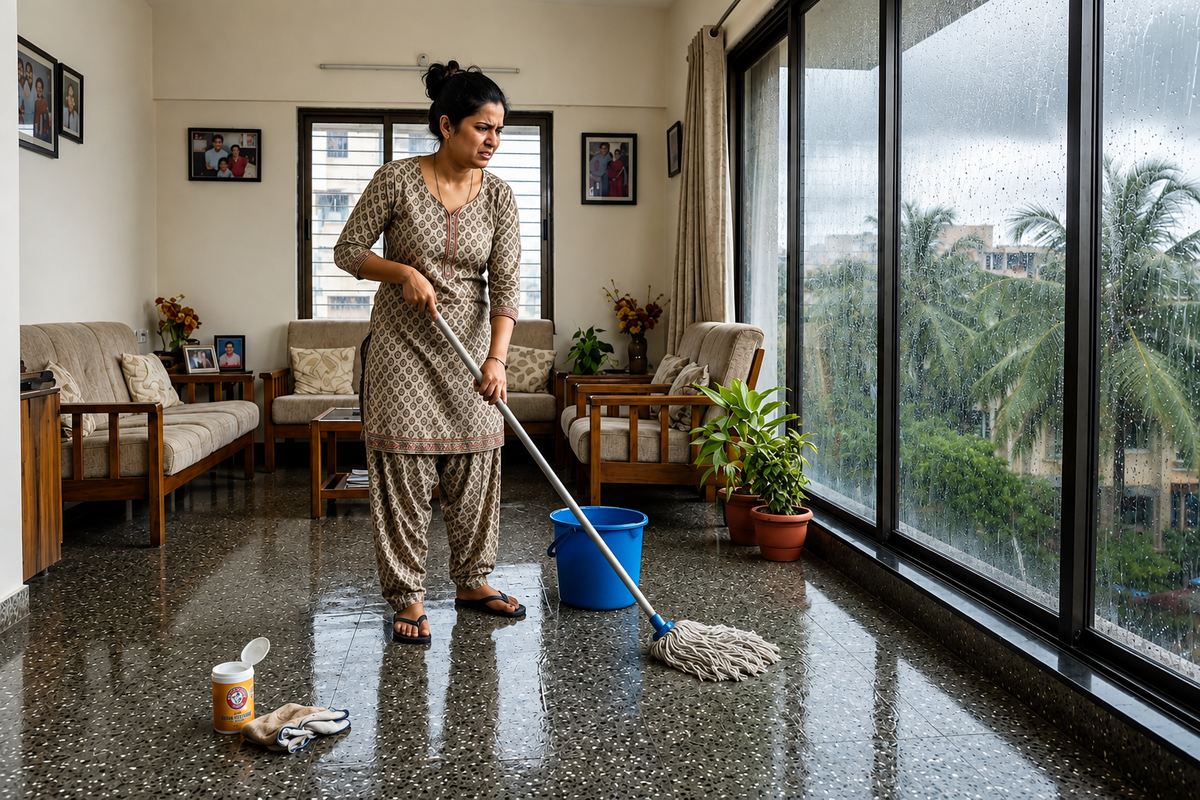
For three monsoons in a row, I did the same thing: the second something smelled off, I’d reach for the air freshener. Spray, problem solved, move on. Except it never actually solved anything - by evening, the smell was back, sometimes worse. It took me embarrassingly long to realise I wasn’t fixing the smell. I was just perfuming a problem that was still very much there.
The smell isn’t the problem - it’s a symptom
During monsoon, humidity often crosses 80%, and in that kind of moisture, walls, furniture, clothing, and carpets hold onto water and take much longer to dry - which is exactly when mould and mildew start growing. Those organisms release microscopic spores and produce the volatile compounds that are the actual chemical source of that musty monsoon smell.
So the smell isn’t dust sitting on a surface that a spray can mask. It’s active growth, quietly happening somewhere in your house, releasing odour as a byproduct. Spraying over it is a bit like muting a smoke alarm instead of checking for the fire.
Where it’s actually coming from
Enclosed, low-airflow spaces - wardrobes, bathrooms, shoe racks, kitchen cupboards - are the usual suspects, and once I started paying attention, mine came from three specific spots: the bathroom, where moisture never really had anywhere to go; the shoe rack by the door, quietly turning into its own little humidity trap; and the laundry pile, where clothes that weren’t quite dry sat just a little too long. That damp clothes smell is one of the most common monsoon complaints there is - once you know where to look, the mystery mostly disappears.
What actually works, instead of just covering it up
Ventilation beats everything else. Wiping down wet surfaces right away - mirrors, tiles, shower doors - cuts off the chance for water to sit around and invite mildew, and even just cracking a door open or running the exhaust fan does more than any spray. For smaller enclosed spaces, natural options like bamboo charcoal bags or rock salt work well, while silica gel sachets are great for wardrobes and drawers specifically. And for the laundry - drying clothes under a fan or indoors when it’s raining, then moving them to direct sun the moment you get a break in the weather, stops that smell before it starts.
None of this was about working harder. It was about matching the cleaning to the season - and once I did that across the house, not just the floor, the difference was obvious. Kleenest's plant-based lineup made that easy to keep up: the floor cleaner for the mud and standing moisture, the bathroom and tile cleaners for the damp spots that breed bacteria, the kitchen cleaner for the grease that gets worse in humidity. Different problems, same non-toxic, family-safe formula behind each one. By the time October rolls around, my house isn't just clean - it's actually held up to a season that tries its best to wear it down.


Leave a comment
This site is protected by hCaptcha and the hCaptcha Privacy Policy and Terms of Service apply.