
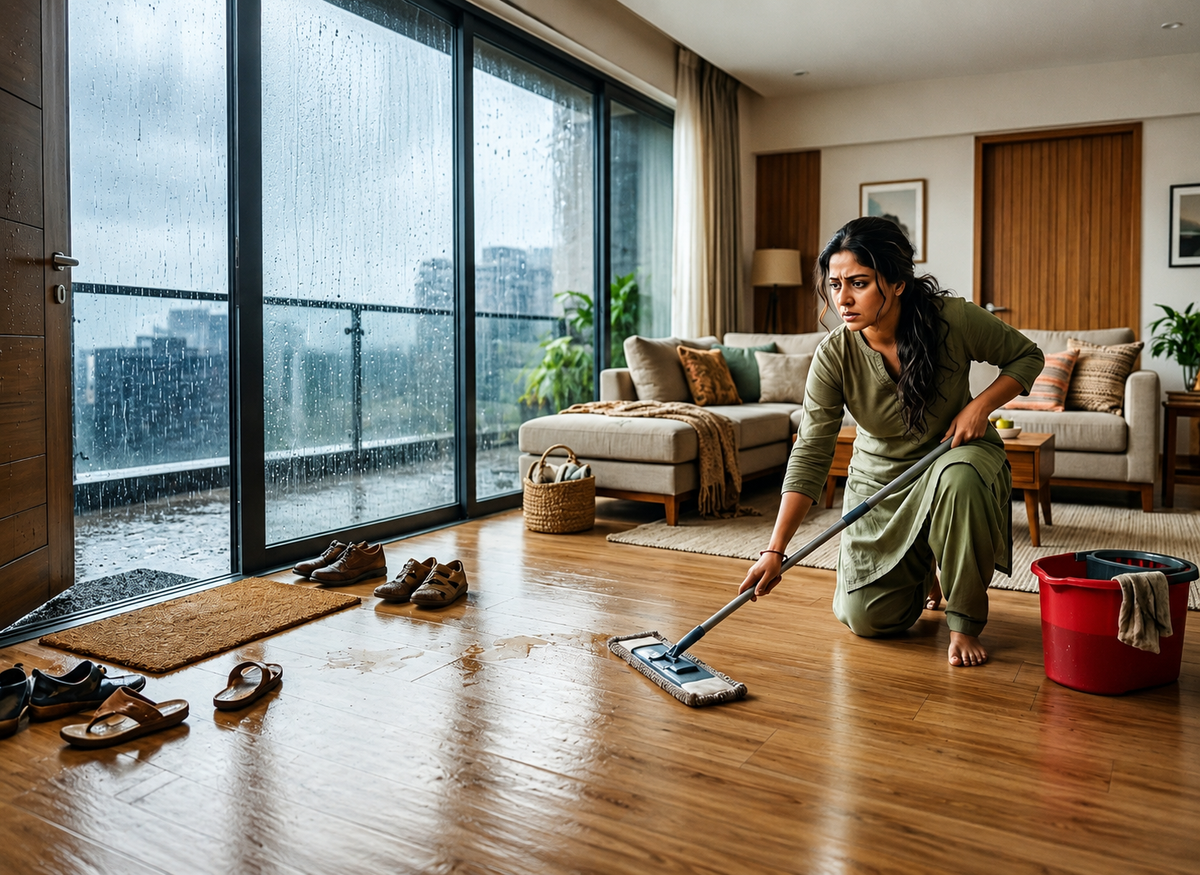
Every year, without fail, I tell myself the same thing come June: I’ve got this. One mop a day, same as always. And every year, by the second week of proper rain, I’m proven wrong. Not because I got lazy - because the floor stopped playing by the same rules I was used to.
It took me a full soggy season to actually understand why.
Why monsoon floor cleaning is a completely different game
Turns out, monsoon floor cleaning is a daily challenge because the floor is often still wet before you’ve even finished cleaning it. In dry months, a mop dries in twenty minutes, floor included. In monsoon, at 80–90% humidity, that same floor takes a lot longer to dry - so it’s sitting semi-wet for hours, not minutes. That’s not you doing something wrong. That’s just how humidity works.
And it's not only about drying time. Every region has its own monsoon mess - be it the sticky black soil of central India, the reddish laterite tracked in across the south, or the fine silty mud common up north - it all finds its way through every entry point, staining grout and dulling floors far faster than regular dry-season dirt ever does.
The damage that sneaks up on you
Here’s what actually got my attention: none of this shows up right away. Standing moisture on marble slowly causes mineral deposits, while on wood-finish flooring it causes swelling - and light-coloured grout near entrances quietly turns brown-grey from repeated mud tracking, to the point where it’s genuinely hard to restore once it’s stained deep. There’s also a safety side to it - smooth vitrified tiles and polished marble get properly slippery when wet, which matters a lot more if you’ve got kids or older parents walking around the house.
By the time you notice any of this, it’s already been building for weeks.
What I actually changed
A few small shifts made a bigger difference than mopping harder ever did:
I started doing a quick wipe at the entryway after heavy footfall instead of saving everything for one big clean at night. A plant-based cleaner with Kleenest's natural formula works well all year round, but it really earns its place during the monsoon stretch when grime hits harder and more often. I also started scrubbing grout near the entrance every couple of weeks instead of once a month, and swapped to absorbent cotton or microfibre doormats, changed daily during heavy rain - because a soaked, unchanged mat just becomes one more thing tracking mud further into the house.
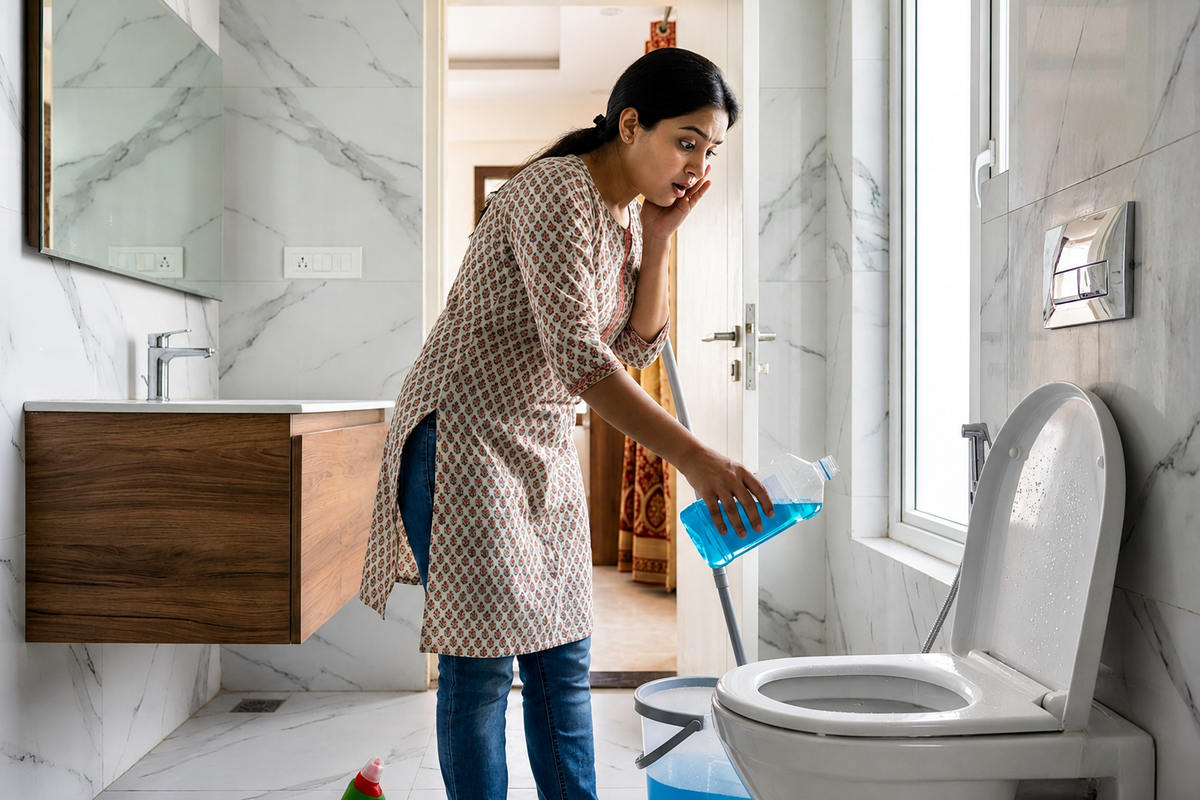
Looking back, the real shift wasn't that I started cleaning more - it was that I stopped fighting monsoon with dry-season habits. Once the floor cleaner, the bathroom, and even the kitchen counters were all running on the same plant-based routine, the house stopped feeling like it was constantly one step behind the rain. That's really the whole Kleenest range in a nutshell - the floor cleaner tackles the mud and moisture, the bathroom and toilet cleaners handle the damp corners where bacteria love to sit, and the kitchen degreaser keeps grease from turning into a slip hazard on humid days. It's not one product doing one job - it's the same plant-based logic covering every surface that monsoon tends to attack first.


Leave a comment
This site is protected by hCaptcha and the hCaptcha Privacy Policy and Terms of Service apply.