
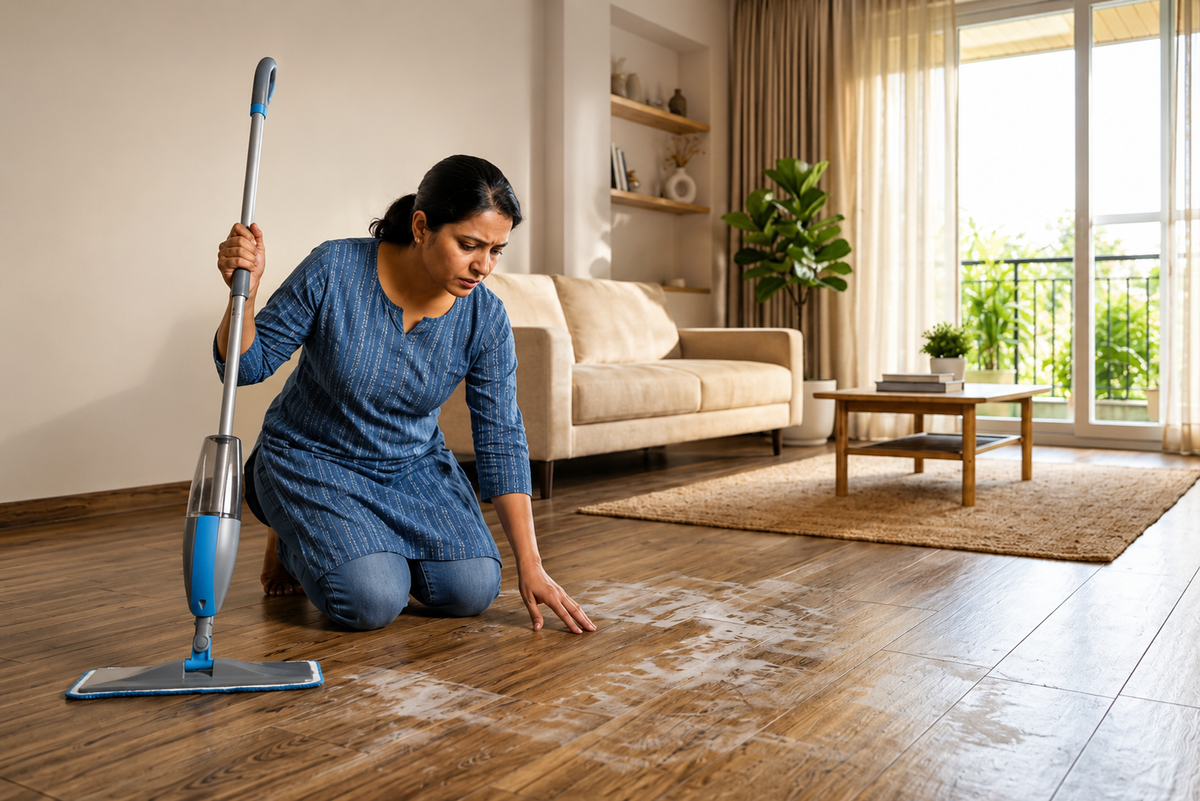
I found out the hard way that “floor cleaner” doesn’t mean “safe for every floor.” My wooden-finish tiles had started looking dull within weeks of moving in - not dirty, just tired. Cloudy patches near the balcony door, a faint white haze near the kitchen entrance. I assumed it was wear and tear. It wasn’t. It was my cleaner.
Why “floor cleaner” isn’t a one-size-fits-all label
Flooring in most Indian homes today falls into a few very different categories: glossy vitrified tiles, matte or wood-finish vitrified tiles, natural stone like marble or granite, and actual engineered wood. Each of these has a different surface chemistry, and cleaners are formulated with that in mind - or they should be.
The two things that actually determine whether a cleaner is safe for your floor are:
• pH level- Acidic cleaners (lemon, vinegar-based, or anything under pH 5) can eat into grout lines and strip the protective coating on wood-finish tiles over time. Highly alkaline cleaners can leave a dull, sticky film on glossy or matte surfaces.
• Surfactant strength - Cleaners built for heavy grease-cutting (kitchen-grade) are often too harsh for daily use on decorative or matte-finish floors, even if they don’t visibly “damage” anything the first few times.
A cleaner that’s genuinely multi-surface safe will usually say so explicitly - not just “floor cleaner,” but tested and labelled for ceramic, vitrified, marble, granite, and wood-finish tiles.
The mistake most of us are making
Most households buy one bottle and use it everywhere - bedroom tiles, bathroom floor, kitchen, balcony. It’s convenient, but it’s also exactly how micro-damage builds up on wood-finish and matte surfaces, since these are more porous and reactive than glossy ceramic.
Signs your cleaner might not be right for your floor:
• A hazy or cloudy film that reappears no matter how well you mop
• Surface feels slightly sticky a few minutes after drying
• Colour looks patchy or faded in high-traffic zones
• Grout lines appear to be lightening or crumbling
None of these show up after one mop. They show up after weeks of repeated exposure - which is exactly why so many people don’t connect the dots until the floor already needs professional restoration.
What to actually check before you buy
1. Check the cleaner for surface compatibility - not just “for floors,” but the specific list of tile types.
2. Check the pH range - a neutral to mildly alkaline formula (roughly pH 7–9) is the safest bet for daily use across mixed flooring.
3. Avoid anything with bleach or high-acid concentration for routine mopping - save stronger actives for occasional deep cleaning only, and only on surfaces confirmed to handle it.
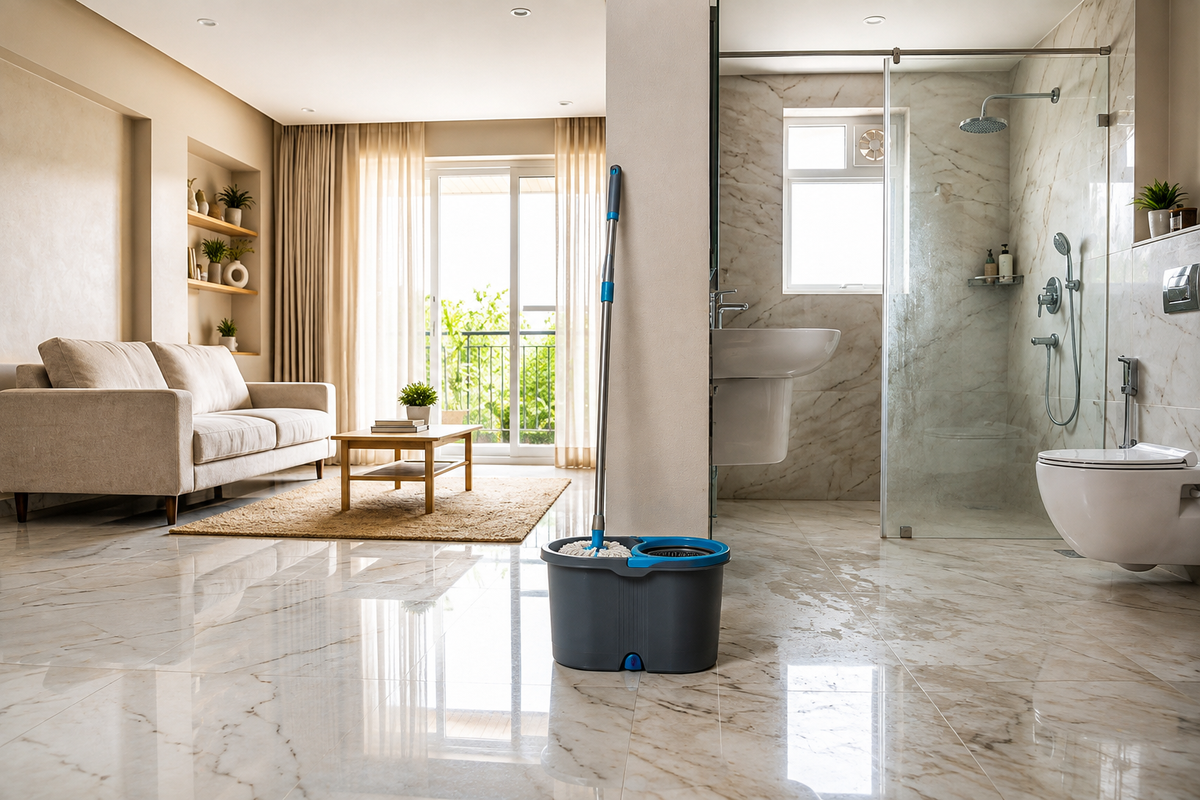
Kleenest's floor cleaner is 100% plant-based, safe on wood-finish, vitrified, marble, and granite tiles alike - so you get one bottle that's gentle on every surface and tough on grime, without the chemical residue that dulls your floors over time.
No guesswork, no damage, just a floor that actually stays as good as the day it was laid.


Leave a comment
This site is protected by hCaptcha and the hCaptcha Privacy Policy and Terms of Service apply.